 NEBYL
NEBYL
Free and ad-free
All thirty-six facts, both modes, the parents’ area and up to six child profiles. No ads, no rewarded video, no subscription.

A game by Nebyl studio
A trainer for ages 7–10. The times table is not a hundred problems but thirty-six: multiplying by 1 and by 10 is a rule, and swapping the factors removes half of the cells. The child sees this on a map that fills in pairs.
Coming to RuStore How it teaches

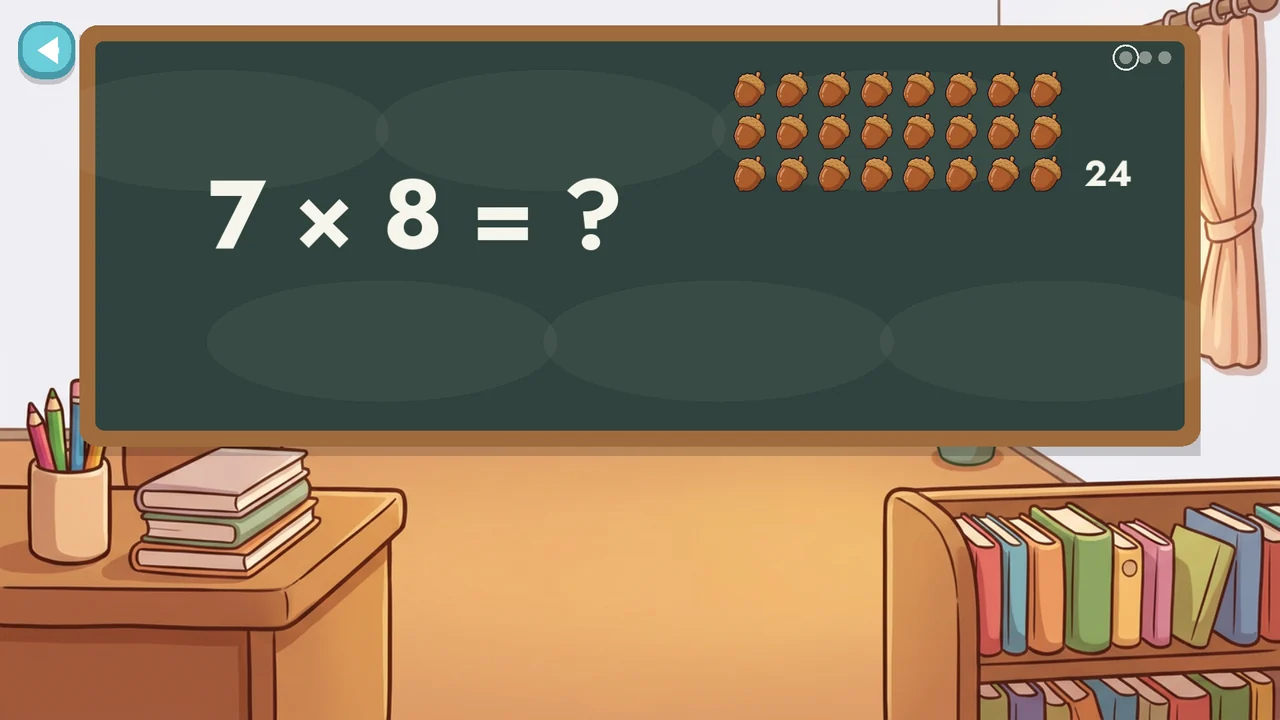
In a notebook the table looks like a hundred problems, and that is the first thing that makes a child give up. In fact multiplying by 1 and by 10 are rules, and 7 × 8 and 8 × 7 are the same cell. Thirty-six are left.
A new fact is shown before it is asked: rows of objects slide onto the board and a number grows beside them — eight, sixteen, twenty-four. Then the array turns a quarter turn, and it becomes obvious that 8 × 7 is the same handful. Only after that comes the question.
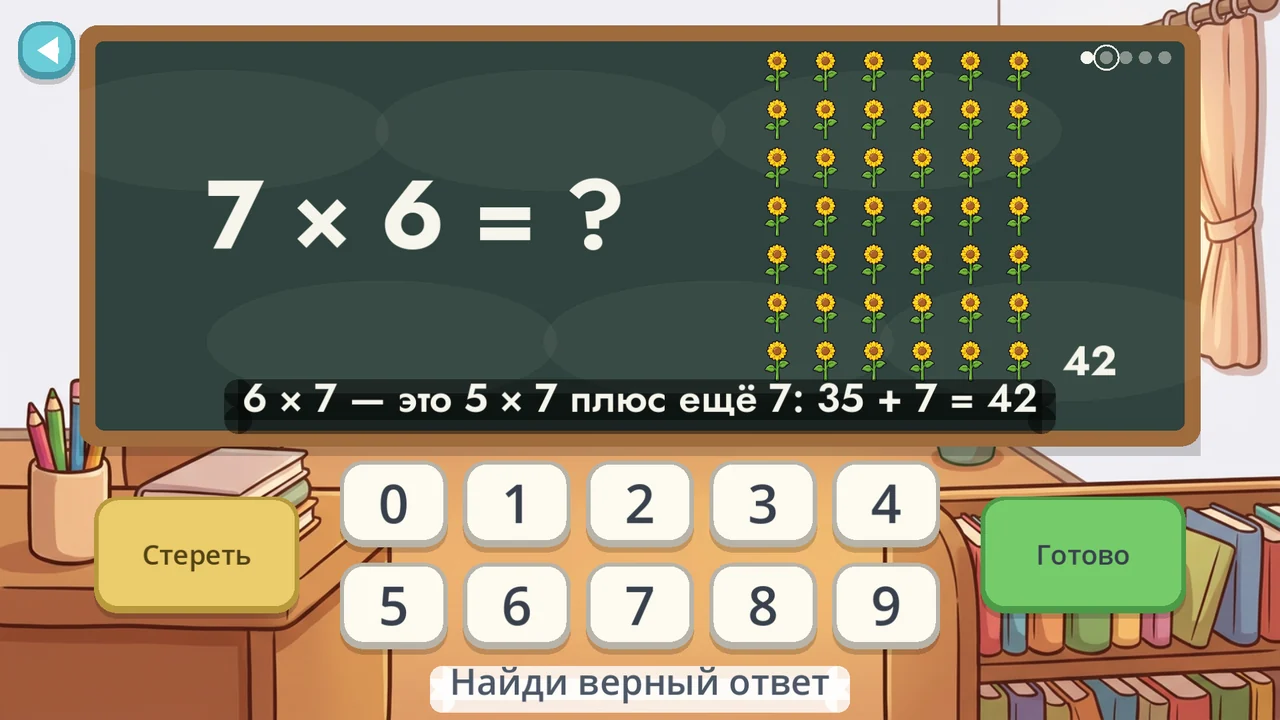
After a wrong tap the correct card is not highlighted on its own. The
same array appears on the board with a one-line support trick:
8 × 7 — double it three times: 14, 28, 56
. The child finds and
taps the right answer himself: being shown an answer and recalling it
are different things, and only the second one teaches.
The same problem returns two to four tasks later in the same session. No red cross, no “wrong” across the screen, no lost points.

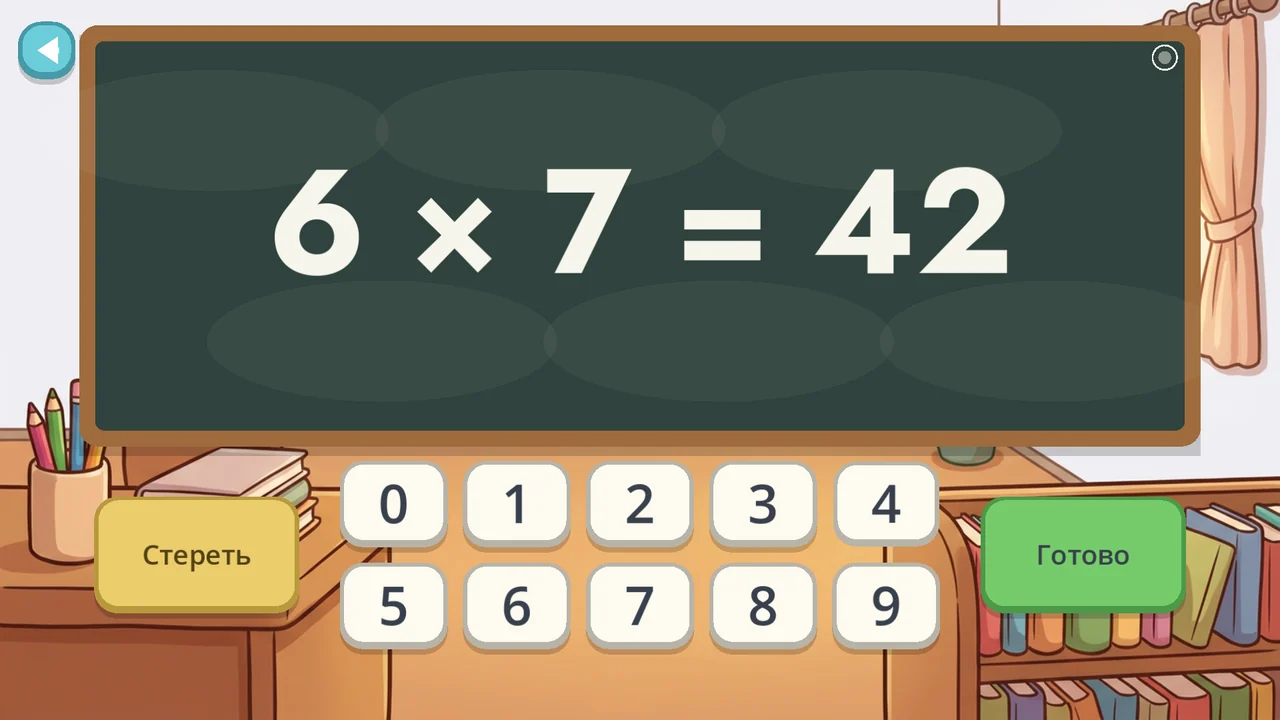
Three, five or ten minutes of problems in a row. A mistake costs two seconds: the correct answer lights up and stays on screen while the penalty runs — and those same two seconds are spent looking at it.
At the end: how many were solved, where he stumbled most often and whether his own record is beaten. The record is personal — no leaderboards, no comparing with a brother.
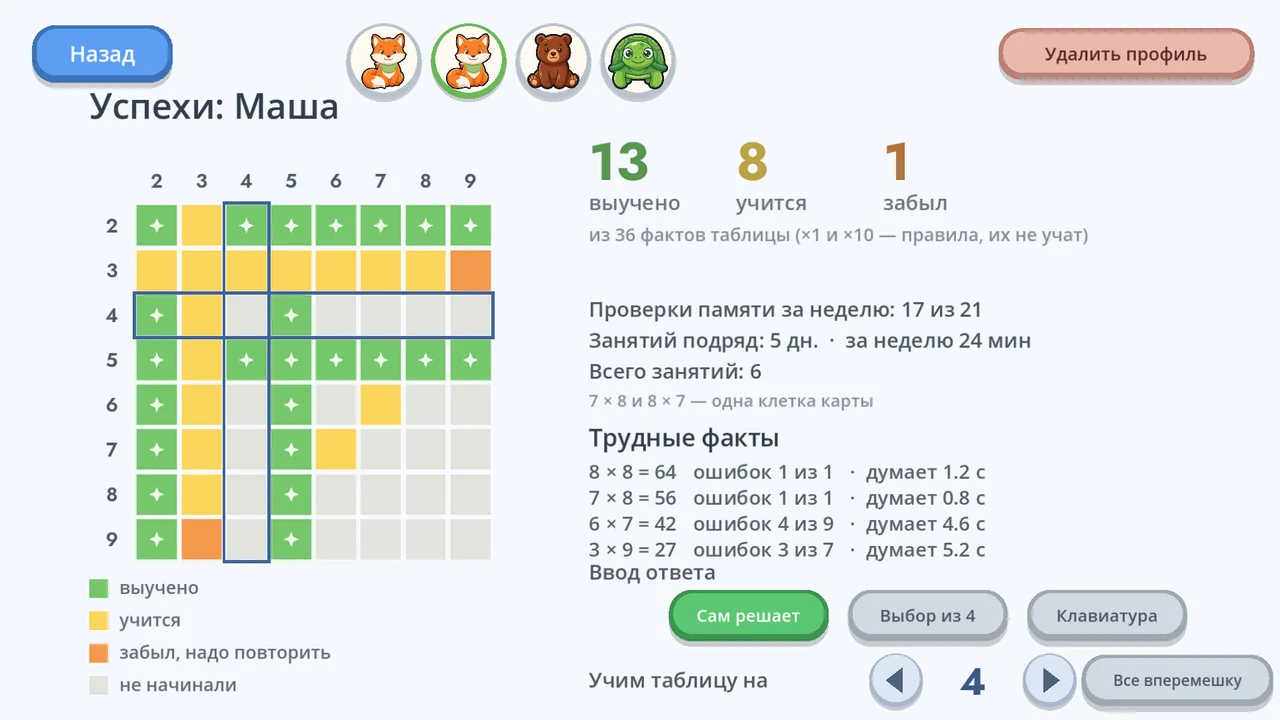
A parent always asks the same thing: does he know it or not. The same map answers it, plus three numbers — learned, learning, forgotten. No percentages, no learning curves.
All of it behind an arithmetic lock: to enter the parents’ area you have to add two two-digit numbers.
A minute of play: a session with a mini-lesson, a mistake explained, an answer typed on the keypad, the timed mode and the parents’ screen.


Nothing. The app is free in full, with no in-app purchases.
All thirty-six facts, both modes, the parents’ area and up to six child profiles. No ads, no rewarded video, no subscription.
The app requests no Android permissions at all and never goes online. Every child’s progress stays on the device.
No rankings between children, no points, no lives, no timer during a session. The motivation is a map filling in, not the fear of losing a life. The studio’s rules are on the home page.
Coming to RuStore Privacy policy
Android 7 and newer, phones and tablets, landscape. The interface is in Russian.
Seven to ten — second and third grade. The child should be able to read the problem: “7 × 8 = ?” is shown in digits, not pictures.
Multiplying by 1 and by 10 are rules, not facts to memorise. Swapping the factors removes half of what is left: 7 × 8 and 8 × 7 are the same cell. Thirty-six products remain, and the child sees this on a map that fills in pairs.
One session is twelve tasks, about five minutes. More is not needed — the scheduled reviews do the rest. Five minutes every day beats forty minutes on Sundays.
No internet is needed: the app requests no Android permissions at all, including network access. No data is collected — no name, no age, no statistics. Child profiles and progress stay on the device.
Yes, up to six profiles. Each has its own animal, an optional name and its own progress, so the app never mixes up who learned what. The profile is chosen at every launch, so a brother does not accidentally practise for his sister.
Neither. The app is free in full: both modes, the parents’ area and all six profiles. No ads, no rewarded video, no subscription.
An array of objects appears on the board — those “seven rows of eight” — with a one-line support trick: “8 × 7 — double it three times: 14, 28, 56”. The correct card is not highlighted: the child finds and taps it himself. The same problem returns two to four tasks later.
The parents’ area shows a map and three numbers: learned, learning, forgotten. “Learned” does not mean “answered once”; it means “remembered a week later and answered quickly”. A correct but slow answer does not raise the level — the child is still counting, not recalling.
Yes. The parents’ area has a “this table only” switch: the whole session is then built from that table, while the order inside stays the same — overdue first, then new, then familiar.
A check for the child who thinks he already knows it all: three, five or ten minutes of problems in a row. A mistake costs two seconds — the correct answer lights up and stays on screen. At the end you see how many were solved and where he stumbled most. The record is personal and compared to no one.